
Will a Chatbot Drive My Customers Away? The Truth About Bot Hate for DM Stores
Customers really do hate traditional chatbots. But the right comparison isn't bot vs human, it's an instant reply vs silence at 1 AM. And in Arabic markets, dialect makes all the difference.
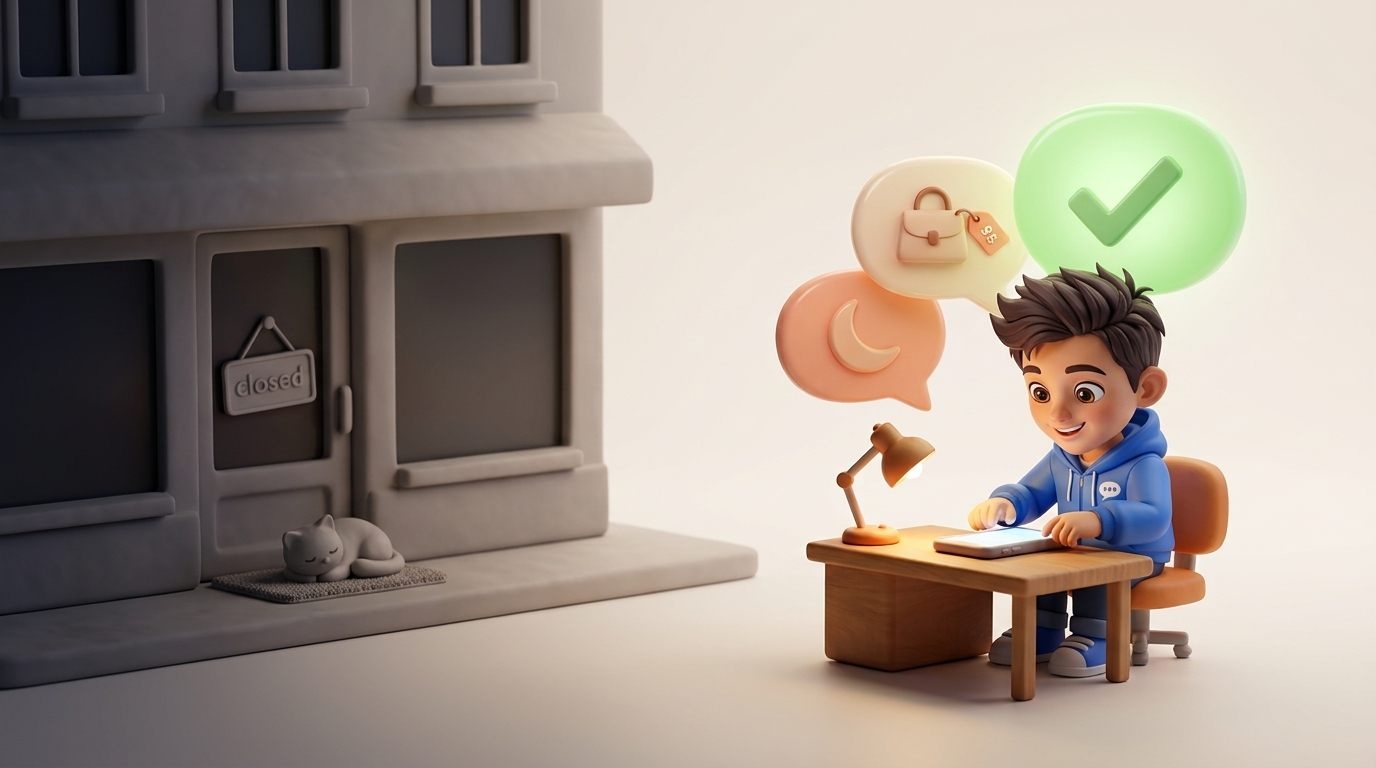
Will a Chatbot Drive My Customers Away? The Truth About Bot Hate for DM Stores
There is one question that stops a lot of store owners from trying any kind of auto reply: "If I put a bot on my DMs, will customers feel the store is cheap? Will they get annoyed and leave?"
Fair question. And the honest answer is: yes, traditional chatbots really do push customers away. But the problem is not that you are using AI. The problem is the kind of bot people have gotten used to. Once you understand why people hate bots, you will know how to use automation without losing a single customer.
People really do hate bots, and they have a point
The global numbers are not kind to chatbots. Recent surveys say around 79% of consumers would rather talk to a human, and more than half of the people who tried AI customer service describe the experience as negative. There is a whole wave of media coverage about "chatbot hate."
But let's be precise about what those numbers measure: the bad bots. The bot that greets you with a button menu, "press 1 for orders, press 2 for shipping," and repeats the same message the moment you ask anything outside the menu. That is not artificial intelligence, that is a wall. Customers do not hate "the bot." They hate having the door closed in their face when they came to buy.
The wrong comparison: bot versus human
This is the biggest mistake in the whole debate. When you read "79% prefer a human," ask yourself: which human?
Your store on Instagram and WhatsApp is not a telecom company with a 200-seat call center. For the customer who messages you at 1 AM, the alternative is not a friendly agent replying instantly. The alternative is silence until morning. And during those hours, that same customer has probably messaged three or four other stores. Whoever answers first usually takes the order.
So the real comparison is not "bot or human." It is "instant reply or nothing." And there is a rule that holds in every DM sale: speed forgives a lot. Customers accept an instant reply that is not 100% perfect far more easily than a perfect reply that arrives nine hours later. Because nine hours later, they either bought somewhere else or the excitement is gone.
Formal language is what gives it away, not the AI
Now for the part almost nobody talks about: in Arabic markets, the thing that makes a customer feel they are talking to a robot is the language, before anything else.
Most global bots are built in English and translated into Arabic, so the replies come out in stiff, formal Modern Standard Arabic. Imagine messaging a small shop about a handbag and getting back the tone of a legal notice: "Dear valued customer, kindly note that your request is being processed." Nobody has ever enjoyed that.
Here is an illustrative example (not a real transcript, but this is how it usually goes):
Customer, 1:07 AM: "This bag is gorgeous 😍 what's your best price?"
The classic menu bot:
"Dear customer, thank you for contacting us. Please choose one of the following options: 1. Product inquiries 2. Order tracking 3. Speak to a customer service representative (available 9 AM to 5 PM)"
An auto reply that talks like you:
"Hey, welcome! 😄 Great taste, that one is one of our most requested pieces. It's 38 dinars, and if you're taking it today I can work something out on the price. Where should we ship it?"
Same customer, same question, same hour. The first one lost the sale and made the store feel like a cold institution. The second one made the customer feel they were talking to a local who gets it, and moved the order forward. The difference is not the technology. The difference is the dialect, and the ability to carry the sale all the way to the end.
And this is not a nice-to-have. In Arabic markets, customers build trust from the way you talk. Dialect is not decoration, it is a signal that whoever is behind the screen understands the market. A bot that replies in Levantine to a customer in Damascus, Egyptian in Cairo, and Gulf Arabic in Riyadh never even raises the question.
What makes an auto reply that people don't hate?
From our experience building Rafiq, an AI sales agent for stores on Instagram, WhatsApp and Facebook, the difference between a bot that repels and a bot that sells comes down to this:
Notice that last row. A good auto reply is not a replacement for you, it is a filter. It closes the clear sales and answers the repetitive questions (which are most of your messages), and escalates to you the cases that genuinely need your call.
"Okay, but do I have to tell them it's AI?"
Our rule is simple: don't announce, don't lie.
There is no need to start every message with "I am an AI assistant." The customer opened the chat to buy something, not to interview the bot. But if they ask directly, "are you a bot?", the honest answer, always. Customers accept talking to AI when the service is excellent. What they never forgive is feeling deceived.
And the nice part? When the dialect is natural and the replies actually solve their problem, the question rarely comes up at all.
The bottom line
- People don't hate automation. They hate dead ends and formal robotic language in a conversation that should feel friendly.
- Your real competitor is not "a human agent." It is silence, and the other store that replied before you did.
- If the auto reply speaks your customer's dialect, understands their photos and voice notes, and can take an order all the way to confirmation, there is nothing left to be repelled by.
Try counting how many messages arrive after you close for the day, and how many of them died without a reply. That is the real price you are paying right now.
Rafiq replies to your customers in their dialect, negotiates, and takes orders, 24 hours a day.
FAQ
Will customers know it's an auto reply? If the bot speaks stiff formal Arabic and freezes at the first real question, yes, instantly. If it replies in their dialect and solves their request, most never ask. And if they ask, it answers honestly.
Won't the bot make mistakes and embarrass me? Any system can make a mistake, just like any new employee. The difference is that a well-designed auto reply knows its limits: it does not promise anything that is not in your catalog, and it escalates complicated cases to you instead of improvising.
What happens to messages that truly need a human? They reach you directly with a summary of the conversation. Automation takes the repetitive questions and the clear sales, you take the decisions.
Does it work in dialects other than Levantine? Yes. Gulf, Egyptian, Levantine, even Arabizi. The reply follows the customer's own dialect, not one fixed voice.